

Drug Crime Arrest?
Get Bail Help Fast
Act quickly with dependable support for release anywhere in Connecticut.
Drug Crime Arrest?
Get Bail Help Fast
Confidential, Dependable Support Available 24/7 Across Connecticut
Drug Crime Bail Bonds in Connecticut
If someone is arrested for a drug charge in Connecticut, release depends on the charge, bond amount, criminal history, risk of missing court, and any pretrial conditions set by police, bail commissioners, or judges. Lady Bail Bonds CT helps families understand the release process and move quickly when a loved one is in custody.
Drug arrests can involve possession, possession of a controlled substance, intent to distribute, drug trafficking, or other criminal charges. The first step is to confirm where the person is being held, whether a bond amount has been set, and what information is needed to begin the release process.
Understanding the Connecticut bail process can help families make informed decisions. Call Lady Bail Bonds CT now for 24/7 drug arrest release help: (203) 203-5239.
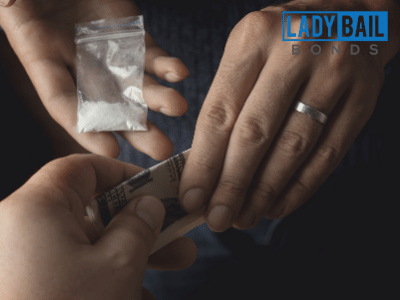
What are Drug Crime Bail Bonds in Connecticut?
Drug Crime Bail Bonds help a defendant secure release from custody after a drug-related arrest while the case moves through court. The bond serves as a financial guarantee that the defendant will return for every required court appearance.
In Connecticut, drug crime cases may involve simple possession, possession of a controlled substance, possession with intent to sell, distribution, manufacturing, or trafficking-related allegations. The seriousness of the case can affect the bond amount, release conditions, court supervision, and timing of release.
A release bond does not decide guilt or innocence. It only allows the defendant to remain out of custody while the legal process continues.
Drug Crime Bail Bond Services help individuals obtain release after arrests involving drug possession, controlled substances, or other drug-related charges in Connecticut. The state-regulated premium is 10% for bonds up to $5,000 and 7% plus a $150 fee for bonds above $5,000, with payment plans available for qualified applicants. Call Lady Bail Bonds 24/7 to discuss the bond process and begin securing release.
If You Need Help Posting Bail in Connecticut
What Should You Do After a Drug Arrest in Connecticut?
After a drug arrest, first confirm where the person is being held, what charge is listed, whether bail has been set, and when the next court date is scheduled. Once you have those details, a licensed Connecticut agent can explain the available release options.
Information to Collect | Why It Matters |
|---|---|
Full legal name and date of birth | Helps locate the correct booking record |
Police department or facility | Confirms where the person is being held |
Listed charge | Helps understand the type of drug case |
Bond amount, if available | Helps explain the release requirement |
Court date | Helps avoid a missed appearance |
Co-signer details | May be needed for paperwork and approval |
Prior court history, if known | May affect release conditions |
Even if you do not have every detail, Lady Bail Bonds CT can guide you on what to ask and how to move forward.
How Does Pretrial Release Work for Drug Charges?
Pretrial release allows a defendant to remain out of custody while the case is pending, as long as they follow court orders and appear for every hearing. In Connecticut, release may be reviewed by the police, bail staff, a bail commissioner, or a judicial officer.
The process usually begins after arrest and booking. The police department or court may set an initial bond amount or release condition. In some cases, bail staff or a judicial officer may review the charge, criminal history, court appearance risk, and public safety concerns before release terms are finalized.
If a surety is required, the family can contact a licensed Connecticut agent. The agent will review the bond amount, explain paperwork, discuss payment options, collect required co-signer information, and coordinate the posting process. Once the required paperwork is complete and the facility finishes processing, the defendant may be released.
Connecticut’s pretrial system can involve police, bail staff, and judges when setting or reviewing release conditions. The purpose is to help ensure the accused appears in court and follows required behavior while released. (NCSL)
Call (203) 203-LADY for Immediate Bail Bond Help in Connecticut.
What types of drug charges may require release help?
Drug-related arrests can range from lower-level possession cases to more serious felony allegations involving sale, distribution, manufacturing, or trafficking. The more serious the allegation, the more likely the court may set a higher bond amount or stricter conditions.
Drug Case Topic | Why It Can Affect Release |
|---|---|
Drug possession | May involve personal-use allegations or controlled substances |
Possession of a controlled substance | May trigger criminal procedure and court review |
Intent to distribute | Often treated more seriously than simple possession |
Drug trafficking | May involve higher bond amounts and stricter conditions |
Sale or distribution | May be charged more seriously depending on the facts |
Manufacturing | May involve serious criminal allegations |
Prior drug charges | Prior history can affect release decisions |
Protected-area allegations | May create additional legal exposure |
Probation hold or warrant | May delay or complicate release |
ICE detainer or other hold | May involve separate custody issues |
Connecticut law treats possession and sale or distribution differently. Illegal possession of a controlled substance other than cannabis is addressed under Connecticut General Statutes § 21a-279, while manufacturing, distributing, selling, transporting with intent to sell, or possessing with intent to sell certain controlled substances is addressed under § 21a-277 (Justia Law). Some drug-related charges may involve felony classifications. Learn more about felony bail bonds.

Is drug possession different from drug trafficking?
Yes. Drug possession usually means the person is accused of having a controlled substance. Drug trafficking or intent to distribute usually means prosecutors believe the person planned to sell, transport, distribute, or deliver drugs.
This difference matters because the court may view trafficking or intent-to-distribute allegations as more serious than simple possession. The type of substance, quantity, packaging, cash, scales, prior criminal history, location of arrest, and outstanding warrants can all influence how the case is reviewed.
A licensed agent can help with release from custody. A criminal defense lawyer should answer questions about the charge, evidence, defense strategy, possible penalties, or whether the allegation may be reduced or dismissed.
How Much Does Release Cost After a Drug Arrest in Connecticut?
The cost depends on the bond amount and Connecticut’s approved premium rules. The final amount should always be confirmed with a licensed Connecticut agent before signing any agreement.
In most cases, families pay a non-refundable premium to a licensed agent instead of paying the full amount directly to the court. The amount may vary based on the bond set by the court or police department and any approved premium structure that applies.
Connecticut requires surety bail bond agents to charge the premium rate approved by the Insurance Commissioner. Public legislative summaries describe Connecticut’s professional bond fee structure as including a set amount for very small bonds, 10% for mid-range amounts, and 7% for amounts above that range. (Justia Law)
Before moving forward, ask what is due today, whether the premium is refundable, whether collateral is required, who is responsible as the co-signer, and what happens if the defendant misses court.
Is the 7% cash option the same as using a licensed agent?
No. The 7% cash option is different from paying a commercial premium to a licensed agent. In eligible cases, the court may allow a defendant or family to pay a percentage directly to the court instead of using a surety arrangement.
Cash paid directly to the court may be handled differently from a premium paid to a licensed agent. A court-paid cash percentage may be refundable if court rules are followed, while a commercial premium is generally a non-refundable service fee. Payment plans, unsecured release, personal recognizance, and surety arrangements are separate release paths and should not be confused with one another.
Beginning January 1, 2024, Connecticut expanded the 7% cash option for certain surety amounts at or below $50,000 unless a judge rules otherwise. For higher amounts, a judge may still allow it by order. (Inside Investigator)
Can drug cases include court check-ins or drug testing?
Yes. Pretrial conditions may include court check-ins, drug or alcohol screening, drug testing, treatment instructions, travel limits, or other supervision.
Possible release conditions may include attending every court appearance, reporting to pretrial services, completing drug testing if ordered, following drug or alcohol screening instructions, avoiding new arrests, updating address information, following travel limits, or complying with GPS monitoring when required.
If the defendant does not understand a condition, they should speak with a criminal defense lawyer before taking action. Violating release conditions can create new legal problems, including re-arrest, stricter supervision, or a future Failure to Appear issue.
Can Payment Plans be Used for Drug-Related Cases?
Payment plans may be available depending on the bond amount, co-signer, defendant history, and company approval. A payment plan usually does not reduce the total premium, but it may make the upfront cost easier to manage.
Before signing a payment agreement, ask what is due today, what the total premium is, whether extra fees apply, whether collateral is required, who is responsible for payments, and what happens if a payment is missed.
A responsible Connecticut bail company should explain the total cost clearly before paperwork is completed. Do not sign anything unless you understand the agreement, the payment obligation, and the co-signer’s responsibility.
What Does a Licensed Agent do in a Drug Case?
A licensed agent helps the family understand the bond amount, prepare paperwork, review payment options, and coordinate the posting process. The agent does not provide legal defense or decide the outcome of the case.
Service Area | How It Helps |
|---|---|
Bond amount review | Explains the financial requirement for release |
Surety process | Helps complete the release arrangement |
Co-signer guidance | Explains responsibility before signing |
Payment options | Reviews available plans |
Release coordination | Helps move the process forward |
Court appearance reminders | Helps reduce missed court risk |
A bail bondsman helps with release from custody. A criminal defense lawyer handles legal advice, motions, plea negotiations, trial strategy, and questions about possible penalties.
What Happens After the Defendant is Released?
After release, the defendant must appear in court and follow every condition listed in the paperwork. Missing court or violating release conditions can lead to a Failure to Appear warrant, forfeiture, stricter conditions, or re-arrest.
The defendant should keep all court paperwork, write down every court date, follow drug testing or screening orders, avoid new arrests, update contact information with the court if required, stay in contact with their attorney, and follow all pretrial services instructions.
Release from custody does not mean the drug case is over. It only allows the defendant to remain out of jail while the case continues through court.
Can a Drug Case Involve Domestic Violence, Probation, or Other Holds?
Yes. Some drug arrests also involve domestic violence, probation holds, warrants, ICE detainers, or other pending charges. These factors can delay release or create stricter conditions.
A probation hold may prevent immediate release even when a bond is available. A Failure to Appear warrant may require court review. Domestic violence allegations may add protective conditions or no-contact rules. An ICE detainer may affect custody status separately from the drug case. Other pending charges or prior missed court dates may increase court concern and affect the release decision.
Families should ask where the person is being held and whether any other hold, warrant, or court matter exists before assuming release will be immediate.
Why Call Lady Bail Bonds CT for Drug Arrest Release Help?
Lady Bail Bonds CT helps families move quickly after a drug-related arrest by explaining the process in plain English, reviewing payment options, and coordinating release support 24/7.
Families call Lady Bail Bonds CT because they need fast answers after a drug arrest, help understanding the bond amount, guidance with payment options, confidential support, local Connecticut experience, licensed surety help, and calm direction during a stressful moment.
When someone you care about is in custody, you need clear information, fast action, and respectful service.
How do you start the release process now?
To start, call Lady Bail Bonds CT with the defendant’s full name, date of birth, location, and bond amount if known. If you do not have all the details, the agent can still explain what to ask and what to do next.
Frequently Asked Questions About Drug Crime Bail Bonds
Yes. Many people arrested for drug charges may be released. This depends on the charge, bond amount, criminal history, past court appearances, and decisions by police, bail commissioners, or judges.
No. Connecticut law treats illegal possession of controlled substances other than cannabis under § 21a-279. Sale, distribution, manufacturing, transport with intent to sell, or possession with intent to sell fall under more serious laws like § 21a-277. The exact charge should be reviewed with a criminal defense lawyer. (Justia Law)
The cost depends on the bond amount, the court’s decision, and Connecticut’s approved premium rules. A licensed Connecticut agent should confirm the final amount before any agreement is signed.
Yes. If ordered by the court, the defendant may have to follow drug testing, drug or alcohol screening, treatment-related instructions, or pretrial services check-ins.
The court may issue a Failure to Appear warrant, order forfeiture, impose stricter conditions, or add further legal consequences.
No. A licensed agent helps with release from custody. A lawyer gives legal advice, handles the defense, and represents the defendant in court.
Yes. Lady Bail Bonds CT provides 24/7 help for urgent release needs across Connecticut.